Our Own DIY Construction Site

Our Olympic love-fest continues. Yesterday we showed some love for London’s construction of the Olympic village and other venues with our “If You Build It…” post. Today we are making our own construction site! I first saw this idea on the blog Happy Hooligans and was waiting for a chance to plug this sensory bin activity into our Camp Mommy line up! This is it.

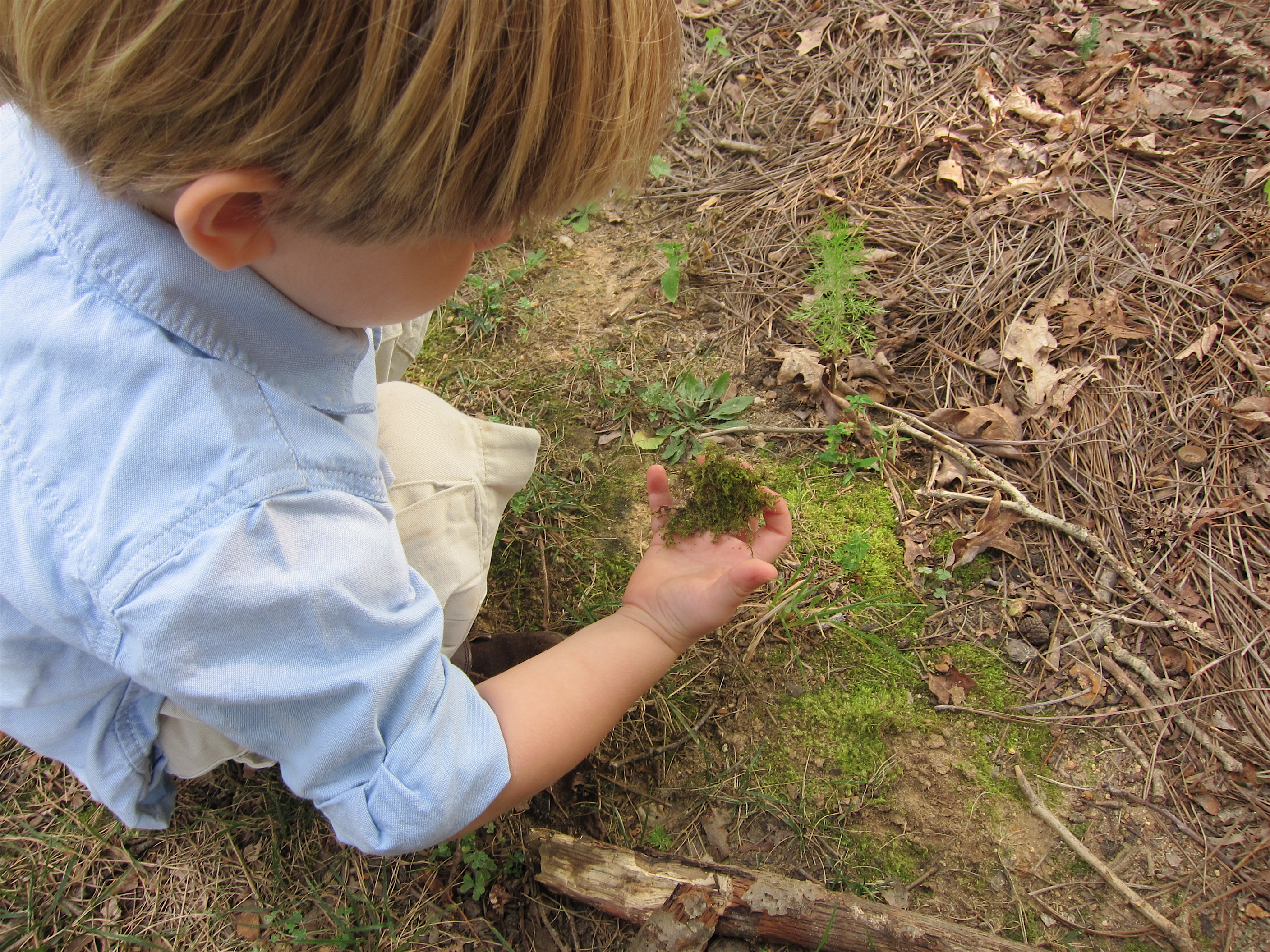
Start with a nature walk. We found sticks, rocks, moss and prickly seed pods for our job site.

We added one package of mini trucks…

…some Lego labor…

…and traffic signs.

Add some dirt from a pot full of plants I managed to kill. Put that into an aluminum roasting pan or any container and Voila! A morning of fun!

TODDLER TAKE AWAY:

  1. Independent Play – I provide the elements and help him get started, then I stay out of it as C develops his own style of imaginative play.
  2. Sensory Experience – There are a bunch of different textures in this bin and every now and again, I ask him about each one. It helps him learn to work with different materials and describe them.

Easy and fun! Enjoy!

Anna

If You Build it…

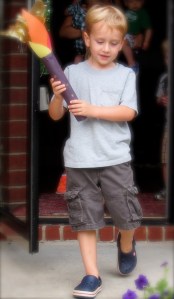
Crowley is geeking over the Olympics. Carrying his Olympic torch around. Glued to TV. It’s cute. Unexpected. But cute.

When I am not beside myself with nerves for the athletes… and their mothers, I am marveling with pure wonder at how beautiful London looks and what a lovely Olympics this has been so far. Sneaking sand volleyball into one of the most formal locations on earth is a stunning move! Here’s a quote from the Wall Street Journal: “London’s beach-volleyball site might rank as this Olympics’ most-striking venue. The purpose-built, roughly-15,000-seat stadium sits on a gravelly lot that historically served as royal parade grounds. The Prime Minister’s official Downing Street residence is visible from the stands, and Buckingham Palace is also nearby.”  I found this cool time-elapse video of construction of the Olympic stadium!

Our Olympic lesson today? Construction and building. And this lesson tastes great, too… no matter your age.

SUPPLIES:

1. Marshmallows of any shape, size or color

2. Toothpicks

DIRECTIONS:

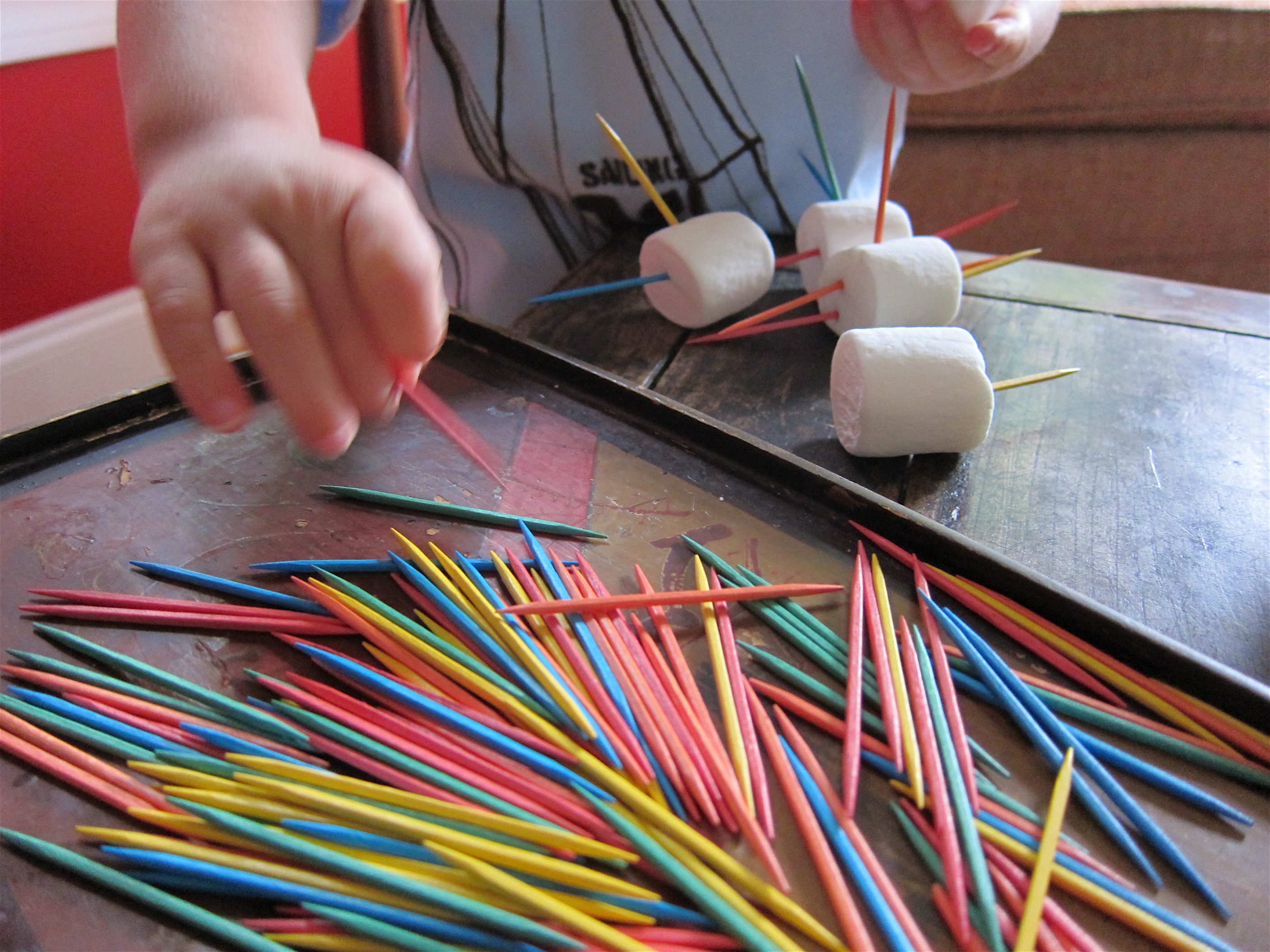
Set them out on a tray and have your Olympian discover some of the first concepts of building like stability, weight-bearing and load distribution. This is one of those activities where you can hand over the supplies and sit back. I found that Crowley and his cousin barely said a word to me while they were building and trying to make their structures stand  on their own.

There is also a great new book out called Good Night, Good Night, Construction Site  by Sherri Duskey Rinker and illustrated by Tom Lichtenheld. Told in rhyme, this is a sweet story of good nights that offers a parade of truck types and their jobs.

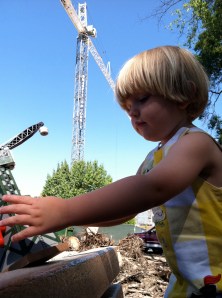
Speaking of construction sites, one of our favorite field trips is to find the biggest construction site in town and visit. I will never forget when Crowley, his beloved Cranky the Crane (of Thomas & Friends fame) and I claimed a local park bench to watch the big cranes work to build a hospital. C was so overwhelmed with awe that when he spotted  the foreman going over the day’s schedule, he shouted out, “ARE YOU WORKING ON A PLAN?”

They fell in love with him and before you know it, C was giving the commands over the walkie-talkie to move their 6-story crane. At one point the the crew moved the hooks of the crane over to show their biggest fan. And Crowley looked at them and asked, “Swing like a monkey?” And in an instant, there went the foreman, swinging on the hooks of that giant crane! I kid you not, I nearly cried because I knew this magical interaction meant the world to my little man. And with out a doubt, after that adventure, C understands how a crane works.

TODDLER TAKE AWAYS:

1) Marshmallow building is a tactile, sensory experience. Great exercise for fine motor skills, hand-eye coordination, problem solving

2) The book helps with rhyming and building vocabulary and an understanding of how construction equipment works.

3) Visiting a real construction site brings it all together. This directly connects play to the real world we live in and makes every construction site there after… a sight to behold!

And the best part is… your little one, like mine, thinks he just had the best day of his entire life!

Anna

DIY Olympic Rings

Ever notice when you go to buy paper plates for a craft project, they come in a stack of (what seems like) one million? Here’s a way to use up 6 six of them! Fun and simple Olympic rings, just in time for the opening ceremonies.

WHAT YOU NEED:

Paper plates (6)

Paint (or crayons or markers)

Paint brushes

Hot glue gun (loaded)

DIRECTIONS:

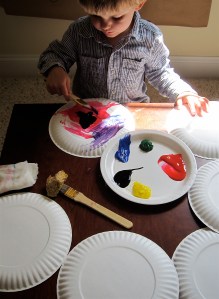
STEP ONE: Load up one of those plates with paint.

STEP TWO:

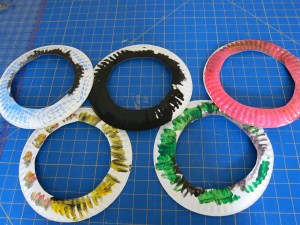
Take your other five plates and turn them over. Now paint the outer rings (or the whole plate if you are a toddler and can’t help yourself). Toddler will also not stick to one color per plate, so Type-A’s prepare yourselves. It will still look fun at the end.

STEP THREE:

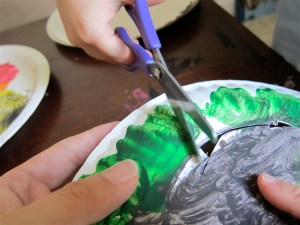
After the plates are dry, cut the middle out. This is a great time for your pumpkin to exercise those scissors skills. (Now just try to say those last four words real fast.)

STEP FOUR:

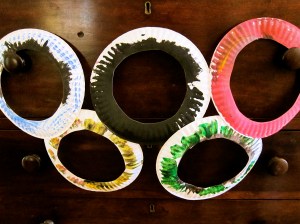
Arrange plates. PARENTS ONLY:  Using your hot glue gun, glue them together.

STEP FIVE:

You are done! Display them in time for tonight’s opening ceremonies!

Looking for something to talk about while you and your little craft? Here’s more about the symbolism behind the Olympic rings.

Check out this site for fun printables and other craft ideas!

Go World!

Anna

Easy Olympic Fun for a Super Hot Day!

Want three quick ways to keep the little ones cool, entertained, and in the Olympic spirit?

All you need is:

  1. Water filled balloons
  2. Side walk chalk

Challenge 1:

Munchkins must try to walk a short distance, holding the water balloons between their knees. This is so fun to watch and a big challenge for them.

Challenge 2:

Draw the Olympic rings on your driveway or sidewalk. We talked about what they mean, but I am pretty sure this went right over their heads. The foundation is laid for later Eureka moments. Call out a color and have the munchkins toss their water balloons into the appropriate colored ring.

Challenge 3:

STOMP FEST – the munchkins came up with this one on their own.

At the end of your games, stomp the balloons! Bathing suits required!

WHAT YOUR CHILDREN GET OUT OF IT: gross motor skill development, color recognition practice, hand-eye coordination and plenty of fun!

Prizes from $1 prize bucket followed which made them soooo happy, which has me rethinking what is spent at the holidays 🙂

Have fun!

Anna

A Trip to London to Meet our Olympic Host

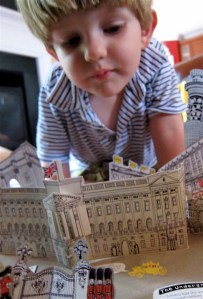
There is nothing like a trip to the host city to really catch the Olympics spirit! So that’s how we are spending the afternoon. In London. The pop-up version.

It’s all part of preparing my little Olympian for Friday’s opening ceremonies. Our list follows below and you’ll see some random choices. But since there are so few and I mean few books about the Olympics for his age, we are taking this opportunity to read stories set in countries participating in the Olympics. It’s a chance for us to sit with our inflatable globe and learn a little bit about the world.

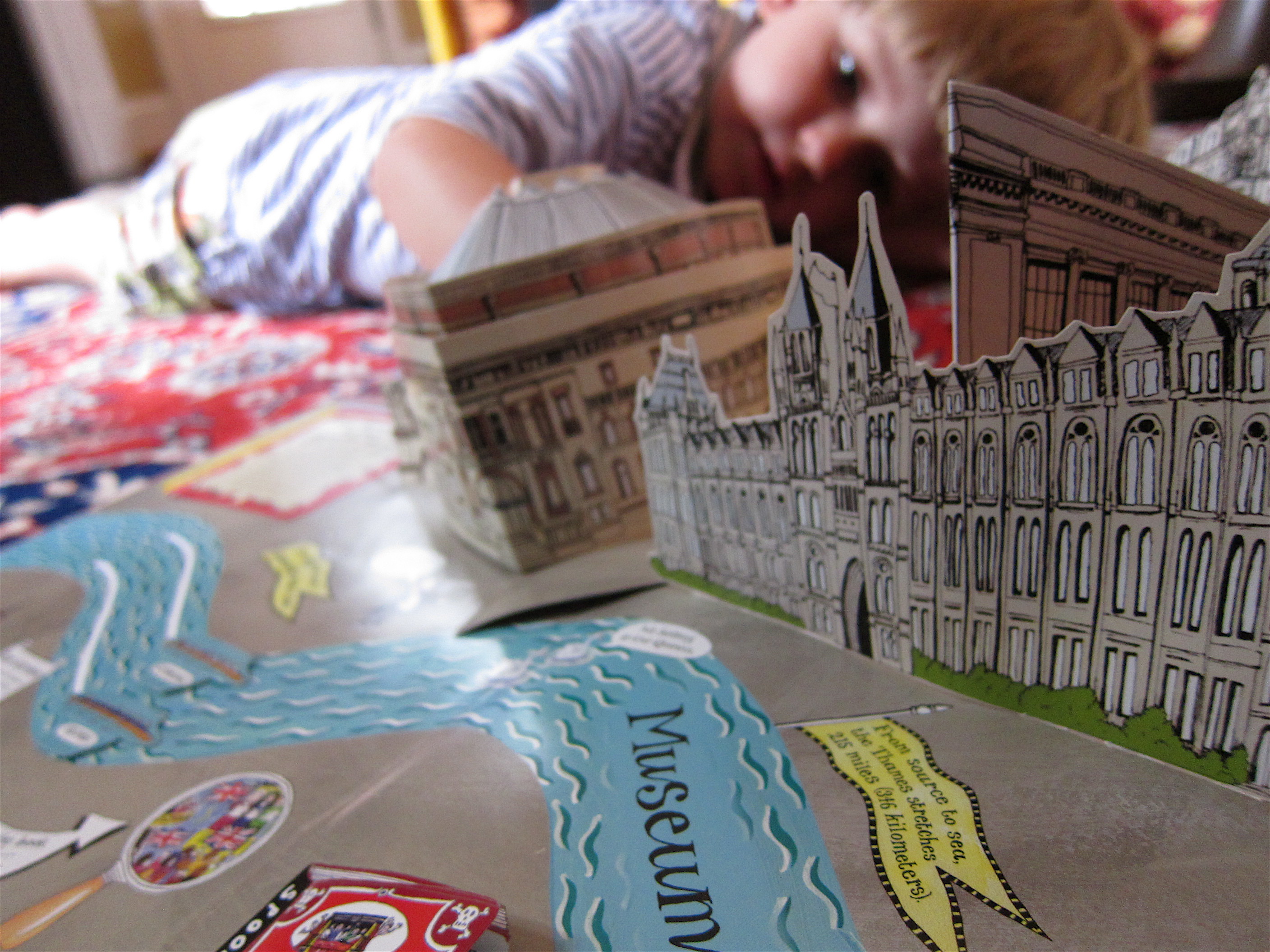
Pop-Up London written and illustrated by Jennie Maizels takes this special paper engineering to an entirely different level. Not only are the outsides of the buildings illustrated but so are the insides. So this is fun to look at from every angle and just teeming with facts, flaps, and all kinds of moving parts. It really gives us a feeling of visiting this miniature version of London Town. Check out the NYT Book Review’s take on it.

And this classic is a pleasure: This is London by Miroslav Sasek is a child’s guide to London in 1959. With updated facts on the last page, you have the charm of days gone by with current information for my Lil’Olympian’s mind/sponge! It was fun for us to have both out at the same time, matching scenes from one book to the other.

We are also reading The Story of Ferdinand by Munro Leaf and Robert Lawson. It’s about our favorite Spanish bull and introduces young readers to spanish culture while reminding your tots to delight in who you are. We’ll read one of my favorite books (about one of my favorite Italian holidays)Tomie dePaola’s The Legend of Old Befana to talk about Italy.

So often Crowley and I pour over maps together of far away places we’d like to visit together. We often do this at bed time, imagining which sites we’ll visit first, where will we find ice cream and the best toy shop? We call this our “Avventura,” the Italian word for adventure. It’s a fun way for us to imagine the possibilities in a very tangible way. The Olympics are a neat opportunity to reconnect with the world and the awe of what’s possible.

Anna

Organic Bug Sprayers…as an Olympic Event

When I saw this idea on super clever blog,  Toddler Approved, I knew immediately I had found our first Olympic event. Toddler + spray bottle + sidewalk chalk = Olympic fun!

And so I gathered my pint sized Olympian and his friends. We huddled in the dining room around the “Prize Box” (filled with $1 treasures).

“Complete your task young Olympians and you can choose a prize!”

I armed each of them with their very own spray bottle and outlined our plan:

1) Observe bugs on our driveway (mommy drawn bugs, each with a letter on it’s buggy body)

2) Man your circle of bugs

3) When I call out a letter, spray the buggy with that letter until the letter is gone.

Olympians Crowley and Jack team up for the win!

4) Repeat for each letter

5) Win a prize

We chose a leader to hold our torch and light the way.

Jack the Olympian leads the way

Then our Olympic chalk-bug anihilators began their work. They loved it!

Olympian Josh and his #1 fan

At the end, we had an awards ceremony and each child chose a prize from the “Prize Box.”

WHAT THEY GOT OUT OF IT:

1) Working with their letters without realizing it

2) Fun in working together to conquer a challenge (they helped each other which is a real accomplishment. The human toddler has epic struggles with sharing.)

3) Motor skills in working with the spray bottle, aiming it at a very specific target to complete their task

4) Sets the stage for the real Olympics, the idea of groups working together or individually towards a goal and the reward of completing that goal.

Are our Olympians aware of all of this? No. They just had fun!

Mission Accomplished!

Anna

Our Olympics Love-Fest Begins… with a flame

The Olympics begin on Friday! So, here at Camp Mommy, we must gear up for the opening ceremonies. While my 3-year-old knows nothing about the Olympics right now, once those games begin, he will want to know more! So, this is a preemptive strike. (Did I just say preemptive? Big word! Makes me so happy right now. Proof the babies haven’t taken every last brain cell.)

So our journey begins with the eternal-ish Olympic flame, cue the Bangles “Eternal Flame” (I absolutely won’t subject Crowley to that or the sign language version I memorized as a tween. Though nothing will stop me from threatening to humiliate him with this in his teen years if he becomes troublesome in the least.)

But today, he is 3 and we are making an Olympic torch. And before we get started, I search YouTube for some Olympic torch video to play in the background so that he can begin to understand this important symbol of the games!

Let’s get started!

SUPPLIES:

black construction paper

paper towel cardboard tube

red, yellow, orange construction paper

gold lamé ribbon (or tissue paper or whatever you have lying around. Because I am a Southern women I have gold lamé ribbon stashed in drawers. It’s just a strange southern thing. We can’t get through a holiday season without it… or gold spray paint.)

Glue stick

Elmer’s glue

Hot glue gun

Stickers for decoration

DIRECTIONS:

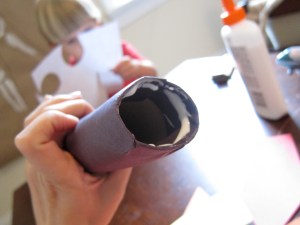
STEP ONE: A toddler’s favorite: take glue stick and spread glue all over back of black construction paper.

STEP TWO: place tube on long edge of construction paper and roll it so that the paper completely covers the tube. Fold the edge that hangs off into the tube.

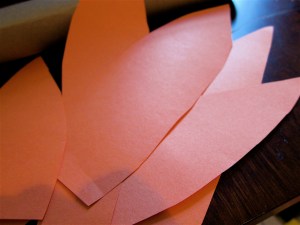
STEP THREE: Cut flame shapes out of your red, yellow and orange construction paper. If your toddler is working on scissors skills, draw the shapes and they can cut them out.

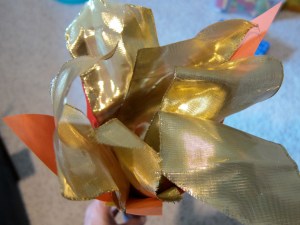
STEP FOUR: apply Elmer’s glue to the end of the flame and press it onto the inside of your tube. Repeat for each paper flame as you work your way around the tube.

STEP FIVE: Gold lamé ribbon. Take a 1-foot section of ribbon and fold it in half. At the gold, apply hot glue and press it to the inside of the tube just as you did for paper flames. I did this with three sections of ribbon which easily filled out our flame and gave it the pizzaz we were looking for!

STEP SIX: Decorate the wand (black construction paper tube) with stickers.

You are done!

Go Team USA!

Anna

The Leg Bone’s Connected to the…

When C was first born, some expert in the one of the 30 baby books I consumed said I should sing to my baby, give him a massage, establish a bedtime routine for baby and on and on and on.

The advice is really endless and each missive more important than the next (you feel sure that if you don’t follow every word of advice, your baby might not make it)… so there I was at 5pm, starting C’s TWO hour bed time routine. Bath and baby massage while singing the song about the bones! The foot bone’s connected to the leg bone. (BTW, baby #2? Simply put in his crib with a ‘good night.’)

This week’s reading list brought me right back to those days. Dem Bones by Bob Barner is a wonderful read. The illustrations paired with this old spiritual are fantastic and dovetail perfectly into our study of dem bones! The pages are filled with fun factoids about the bones which will make this book a keeper for years to come!

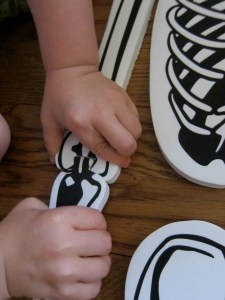
While I read the book to C., he set about working on this foam floor puzzle. And I love it. This will be a learning tool we’ll use for a long time as C’s understanding grows over the years. And yet the puzzle is simple enough that he can nearly complete it by himself! One the puzzle is complete, we sing the bones song as C points to each bone as its mentioned!

To keep track of all of our human anatomy reading, we’ve made the book spine to end all book spines. Cuz ours is a real spine.

Perhaps not a candidate for a Martha Stewart spread, but he’s very friendly. Just not a looker.

I’ve printed out the book covers so they make up our vertebra. Just like with our reading sea snake, I find it’s more helpful for Crowley to see the covers of the books so there is an instant visual recognition to what he’s accomplished! We also printed out a skull from a free template found online. We printed it on construction paper and later added the rib cage and arms. The perspective is a little wacky, I have to admit. On the upside, our skeleton is plenty friendly and not scary. And with every new book we read, he just gets lonnnger!

Here’s what we are reading!

Inside Your Outside!: All About the Human Body By Tish Rabe and Aristides Ruiz

Dem Bones by Bob Barner

The Magic School Bus Inside the Human Body by Joanna Cole and Bruce Degen

The Magic School Bus Explores the Senses by Joanna Cole and Bruce Degen

Human Body (Insiders) by Linda Calabresi

Navigators: Human Body by Miranda Smith and Alex Pang

I provided links to all the books above to make it easy for you. But honestly, these are all available at your local book store! Not to mention you’ll find them on library shelves! We also rented the companion DVD to the Magic School Bus from Netflix and it’s the perfect animated tie-in. Crowley loves watching it. And even though they are going over pretty complicated stuff, he’s glued to it!

Tomorrow, a field trip! Next week, I’m thinking Olympics prep! Thoughts?

Enjoy!

Anna

P.S. We have an ear infection in the house which means we’re a little sleep deprived. All this to say, I am ready for my night time routine. Anyone available to sing to me, draw my bath or arrange for a Swedish massage? A little rocking? No?

Because Everyone Needs a Backbone…

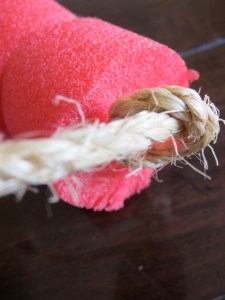
Skeletons are really some of the first images of anatomy that we see as children, especially around Halloween. So this is a great jumping off point for us. What is a skeleton and what is the backbone? I found this great idea to help answer these questions and decided to get started! All you need is a foam swimming noodle and some thick elastics for tying back hair into a pony tail. You cut the noodle into sections a couple of inches thick. And you’ll need a piece of rope to be the spinal cord.

Tie a knot at the bottom of your piece of rope or spinal cord.

Start stringing your vertebra (foam sections) and discs (thick rubber bands) alternately.

Having anatomy books close at hand helped my munchkin visualize what we were doing. This gave us a chance to talk about patterns, shapes and the functions of these parts.

Putting these pieces of spine on the cord was also great for C’s fine motor skill development. This is a quick and easy project that brought our backbone to life in just 15 minutes which was perfect for the 3-year-old attention span!

Enjoy!

P.S. Tomorrow, we’ll explore great books to read on this topic and how the spine can help us keep track of our reading accomplishments!

A Toddler Anatomy Chart. Seriously.

Got to love it when math, science and art come together in one project!

When I started thinking about C’s interests in the heart and the brain (A.K.A.  bwain), I knew I wanted to put our contractor’s paper back to work. It’s the same resin paper we used for our ocean and beach mural. I had this vision of tracing the munchkin’s outline right onto the paper. I started looking around the web for ideas and found exactly what I was looking for! Check this body map idea out from the Pink and Green Mama.

We made a few adjustments. And this is one of those projects where you can really make it your own by using materials you already have at home or letting your little one take the creative lead on how to make the bones, heart, etc.

My dad (G.G.) participated in this project with us and had the great idea to make a rib cage out of a paper plate.

Glue down the ribs on one side only

It’s easy enough to cut rib shapes out of opposite sides of the plate and leave the sternum in the middle. And the best part is, if you glue down on one side ONLY, you can peel back the rib cage any time to check out the lungs, heart and stomach.

After glue dries, you peel back your ribs to peek at other internal organs

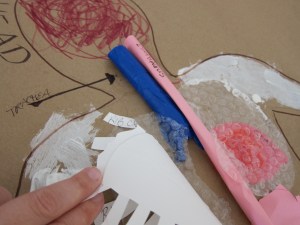
For the intestines, we used long strips of bubble wrap.

Just add glue and roll.

We added glue to our chart, twisted up the intestines and squashed them into place.

I drew the bones and Crowley painted them in… sort of. He took a little creative license.

I drew the heart and stomach from construction paper which gave him a chance to practice cutting them out, by following my lines.

Crowley drew that beautiful red brain! Lastly, I labeled the various parts for him to reinforce his emerging recognition of letters.

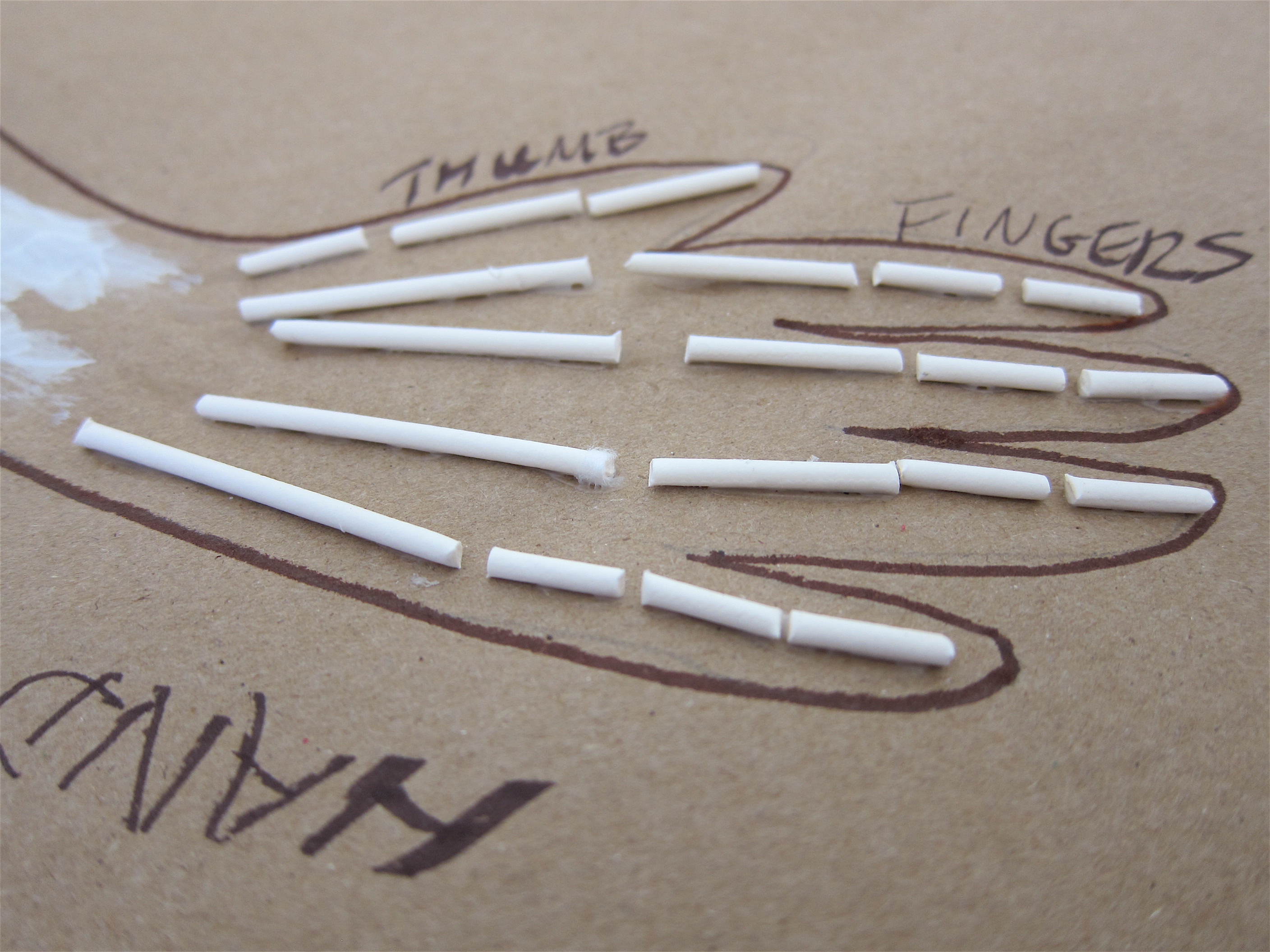
This is a fun project. The finger bones are from q-tips just like the one at Pink and Green Mama.

This was a great counting exercise for C, to actually count the bones in his hand and figure out how many lengths of q-tip we needed. This also helped C understand the relationship from the pictures of bones in our books to the bones in his hand to bones on our chart.

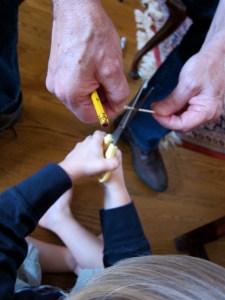
Major opportunity for cutting practice with G.G.’s supervision.

This project is tremendous fun and an amazing way to give children a tangible connection to their own bodies.  And the older the child the more sophisticated their anatomy chart the better their connection. Ours is now proudly hanging in the adventure room!

Tomorrow, an easy and tactile to way to teach the munchkins about the spine and a fun way to keep track of their reading accomplishments this week!

Anna

All I Need is the Air that I Breathe and to…

Oh… the title to this post! I just really did not want to suffer alone with that whiny Olivia Newton-John song repeating in my head. (My husband informs me it was a whiny Hollies song first.) It makes it more bearable somehow that you, too, will hear it drone on and on. Why is it stuck in my head? Because it’s “Human Body” week in the adventure room and we are starting with the lungs!

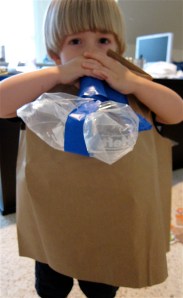
And what better way for my munchkin to learn about lungs then to wear a pair? Right on his vest! That’s made out of a grocery bag! I was inspired by this idea, but wanted to have real functional lungs on our vest!

SUPPLIES:

Paper Grocery bag

Tape

Paper or plastic sandwich bag

Paper towel tube

DIRECTIONS:

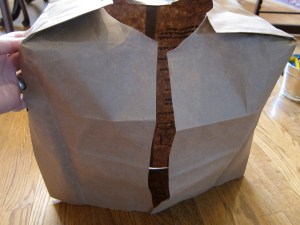
STEP ONE: Cut the handles off of your paper bag. Cut open straight up the middle. Cut a circle out of the top that will act as the neck opening of jacket.

STEP TWO: Cut out the arm holes.

STEP THREE: Carefully turn bag inside out.

STEP FOUR: Cut off 1/4 of your paper towel tube. You are left with 3/4’s the original size. This will be your trachea or windpipe.

STEP FIVE: Tape a sandwich sized plastic baggie or brown paper lunch bag to the end of the tube or trachea. (note: if you choose the plastic bag, this becomes a science project your child should only wear, examine, or use in the presence of an adult!)

STEP SIX: Use a piece of tape to cinch up the middle of the bag, to create the appearance of two lungs.

STEP SEVEN: Attach lungs and trachea to your bag jacket. The trachea should come off the top of the neck opening enough that your child can easily blow air into it while wearing the jacket.

Rough and rudimentary, this project does help the littlest munchkins understand lung function.

YOU ARE DONE!

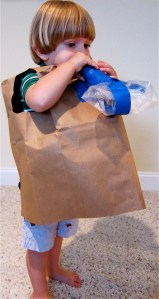
Now it’s time for your child to wear his jacket and inflate the lungs.

Seeing Crowley do this really made me laugh!

As we made this together, I asked him to identify his own trachea on his body and to place his hands on his chest to feel air moving in and out of his own lungs. He certainly got the point and has been eager to show his homemade “lungs” to everyone. One more reminder (so I won’t spend 3-4am awake thinking about this) that plastic bags and children MUST be supervised. As soon as C is done playing with this, I put it out of reach!

Breathe,

Anna

The Pay-Off!

When I look around our Adventure Room (formerly the bonus room), I have to admit, I get a little bit teary.

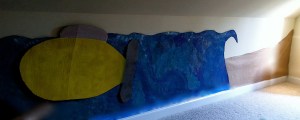
Look at where we started….

And here we are today!

And I have to say, that having all of you along for the ride, has made this experience even better. So, thank you!

Today, we are bringing our ocean focus to a close, but on Monday, we work anew. Our old pediatrician in Roanoke, Virginia, taught me something I will never forget as long as I am in the child-raising business: Follow Crowley’s interests. He said, “You don’t need to force feed him information. Just pay attention to what Crowley is interested in and help him explore that interest to the fullest.” GREAT ADVICE, Dr. Craft! I am forever thankful because that has defined my relationship with my son.

So in deciding which topic to run with next, I just listened to Crowley and watched. And he picked up a human anatomy book and began asking questions about the heart, the brain, etc. He calls it the brain book. And so, Monday, our exploration of the human body begins! And it’s going to be great! Let’s see where this adventure leads!

Anna

A DIY Ocean to Play In!

After weeks of oppressive heat, the rain is here. Great for our pitiful looking flowers. Bad for dispensing of a certain 3-year-old’s energy. It’s time to distract and engage him. At least I can wear out that active little brain!

So, we are going to make a very cool ocean sensory bin. This “sensory bin” idea is a completely new one to me. But I’ve discovered this activity has quite a following in the mommy blogosphere and now I know why!

  1. They are easy to put together.
  2. Inexpensive fun.
  3. Your munchkins will learn by using their hands and have an opportunity to work with different textures.
  4. It holds their attention for more than an hour (which is really a win for everybody)

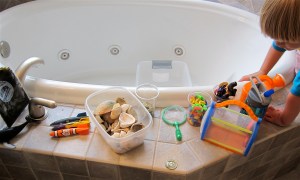
If it’s sunny at your house, feel free to do this outside. As for us, I’m setting this up inside of our master bedroom tub. It’s large enough to accomodate my little man and a plastic storage bin.

The side of the bath is lined with objects that he’ll use to make his own ocean!

You can really customize this to your child’s needs. In this case, my little monkey hates slimy textures like the inside of the pumpkin or anything sticky.

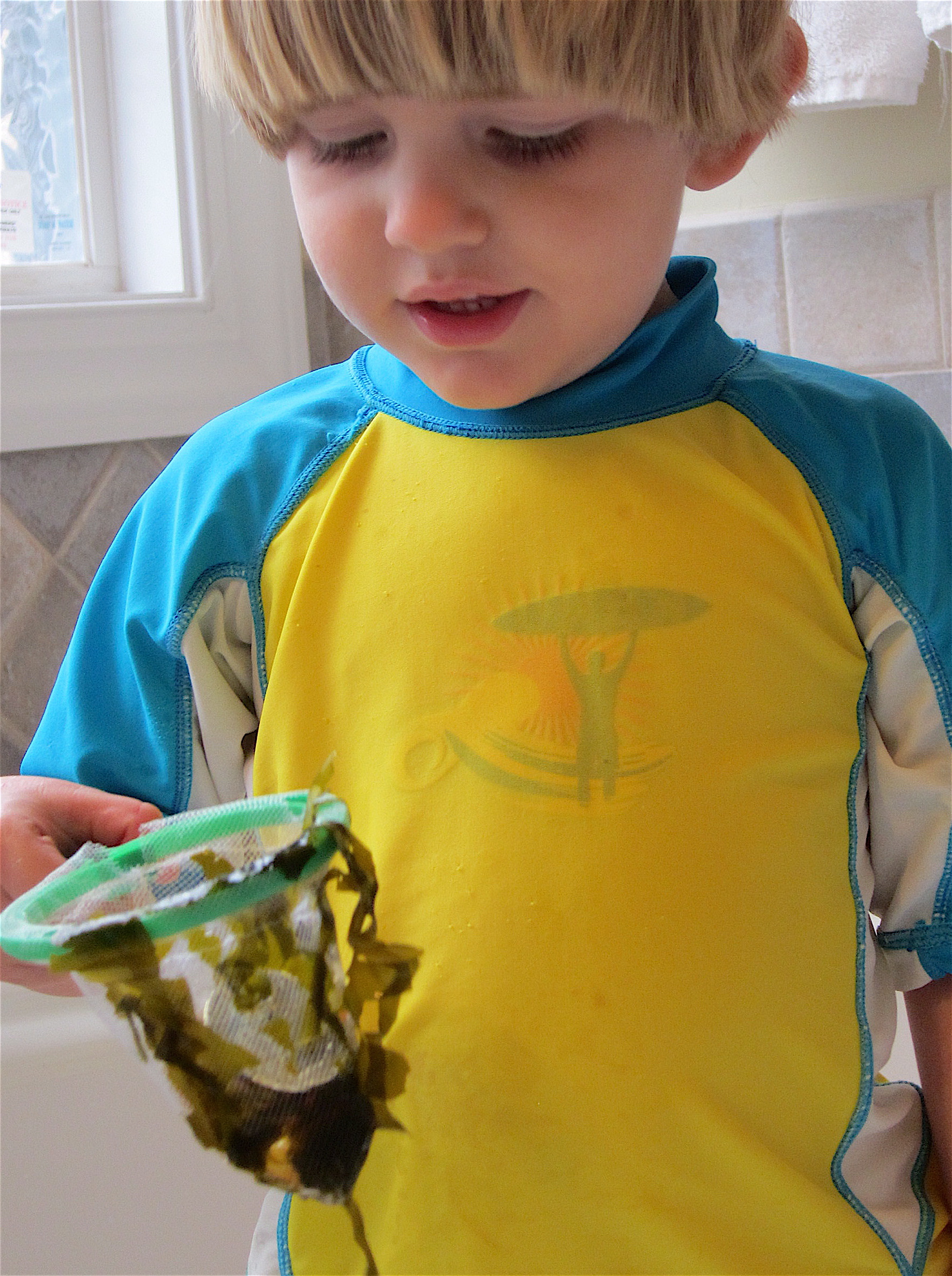
So, I bought some salad cut kelp (at Whole Foods) to help engage his interest so that he can learn to work with that slimy texture and not be quite so grossed out!

And he loved it.

Then we added real sea shells.

And small ocean animal beads.

A note about the itty bitties. Because we have a baby in the house, C no longer gets a lot of time with tiny objects. So this is a great time for fine motor skill development. We bring out the small objects just for this. And as soon as we are done, they are put out of reach.

The pirates really seem to trigger his imagination.

I also supply a bunch of tools like empty OJ bottles, a watering can, etc for him to pour water in and out of and a net for scooping up treasure. And then I back off. I let Crowley play with this exactly the way he wants to.

Sometimes, when it’s all a soupy mess, we play I Spy which has been fun, but this is truly an excercise in independent play. And believe me, this keeps him entertained for about an hour and a half. That said, given there is water involved, I am right next to him… just not directing how he plays.

We have a few rules like all the contents of the bin STAY in the bin. And when we are finished, the last thing we do is clean up by sorting the toys which helps him with early math skills.

This is how we did it, but there are so many other ways to do this and other subjects that are great for sensory bins.

Have fun!

Anna

Piratey Sails for our Ship

A great looking pirate ship needs great looking sails. And by great looking sails, I mean worn, torn and a little haggard… proof that they have, indeed, sailed the seven seas!

TO THE LINEN CLOSET!

I don’t know about you, but while we have a king size bed, we do not have king size pillows on it. And yet, there are about six king size pillow cases in the linen closet. Well, now, we have four! Reminds me of the time I cut up a couple of my husband’s shirts for the tiniest piece of applique for one of Crowley’s JonJon’s!

WHAT YOU NEED:

  1. A couple of pillow cases (king or queen, stained and yucky or just out of the package, doesn’t matter)
  2. Black paint
  3. Paint brush on sponge
  4. Jolly Roger stencil (plenty avail around Internet) or a pencil if you are going to free hand it.

STEP ONE:

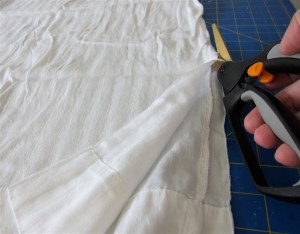
Cut open one of the long seams on your pillow case.

STEP TWO:

Now, turn the corner and cut the short end open!

STEP THREE:

Open up you case! You have a flag. Now you can trim the pillow case down to fit your ship, Remember the more unfinished the edges, the better. This is a pirate ship after all.

STEP FOUR:

Decorate it. (note: I am using the hemmed bottom of the case as the top of our sail. The double thickness will be better for attaching it to the ship) For our Jolly Rogers, I took a look at different images on-line and drew it. There are plenty of stencils out there as well. But this was not hard to draw. We used acrylic paint for our Jolly Roger. We applied the paint using a sponge and brush. Now if you want a solid black, crisp looking image, simply apply more point and mind the lines. We chose to sponge our paint on for a more sea-faring weathered look!

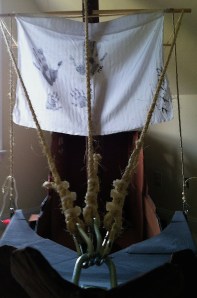
For the second sail, I decided we needed a record of the hands that made the ship. So we painted my husband’s hands and planted them right on the flag, then did the same for Crowley’s just below. I painted their initials and the date and called it a day! I love this. Not only do we have the date, but the size of those little hands that worked so hard on the ship!

STEP FIVE:

Hang your sails. There are many ways to do this. We used zip ties. Poke a hole on the far upper right side of your sail and again on the left. Run your zip ties through the sail and attach to the dowel rods coming out of the masts. That’s it!

You are done! Time to gather your hook, eye patch, spyglass and hat and have a piratey adventure!

Anna

Part 2: Building a Pirate Ship!

Hey all! It’s Mike again (Anna’s husband)… I see the Pirate Ship blog yesterday was popular. Something about Pirates. I’ll explain the masts and rigging in a minute. Much easier than I thought it would be.

But first I have to tell you a quick ditty about the time I was on a secret archeological dive vessel… as the booty from Blackbeard’s ship Queen Anne’s Revenge was brought to the surface. True Story. We were the first TV crew invited out as archeologists dove the federally recognized-Coast Guard protected shipwreck on the ocean floor off the North Carolina coast!

We weren’t even allowed to tell our viewers where we were. But we watched as bottles and plates and even cannons were brought to the surface. I think the most amazing part for me was holding musket bullets from Blackbeard’s guns in my bare hands. Crazy. Here are a few picks from that story.

The brilliant Photojournalist/TV Producer Andy Benton captured everything.

These grown men and women were like giddy children as they retrieved more and more history from arguably the most famous pirate ship in history.

A cannon from the QAR!

Okay, onward. The key to the masts is the wood plinth blocks I glued to the cardboard to hold the tie downs that clipped to the karabiners that synch the rope that keeps the masts tightly in place. Follow? Lemme splain.

I epoxy glued and then screwed these tiny plinth blocks to each other on the inside and outside of the boat where I knew the tie-down rings would be fastened.

One on each side of the six locations the mast ropes will be secured to. Three in the front, three in the back…

While I started work on the masts, I gave Crowley the important job of sanding and painting the six cannons we would carry. After C got a base coat on them and they dried we epoxy glued them to the ship… three on each side. Then we added a “wood” door that opens before we fire the weapons.

I took the cardboard tubing given to us by Lowe’s from empty carpet rolls, and cut about a foot off of each. I sliced open that one-foot section of tube long ways and pried it open until I could slide the long mast into the shorter section. Then I taped over the slit in what was now a collar for each mast to sit in. (I needed removable masts to be able to fit the boat up the stairs on the way to the bonus room.)

Mast inside its collar…

Then I taped the collars to flat cardboard bases and slid the masts into the collars. While Crowley painted the lower half of the masts I put another coat of exterior paint on the boat. Then I drilled holes into the masts near the top and into the dowel rods. Even while C was still painting, I was sliding the ropes through the holes and attaching karabiners to the ends and clipping them to the tie downs I had screwed to the plinth blocks. Then I carefully tightened the ropes evenly and Zip tied them. Voila!

I finished painting the upper half of the masts while Anna & Crowley made the sails complete with a Jolly Roger image! We attached them with Zip ties as well.

The ship is basically done. Though we added some embellishments: round windows in the back, painted the boat name Crowley came up with on the very back – “Conch E. Conch” and touched up the red stripe.

Because of the heat we barely got an hour or two of work done each Saturday and Sunday for three more weekends. So while it took a month of weekends to build our Pirate Ship, we only spent between 15 and 20 hours total on it.

It’s hard to explain what a unique bonding experience this was for me and my little boy. We built a freakin’ pirate ship together! The whole neighborhood watched as it went from “What are they doing with those old moving boxes?” to a life-like pirate ship. We did something special. Together.

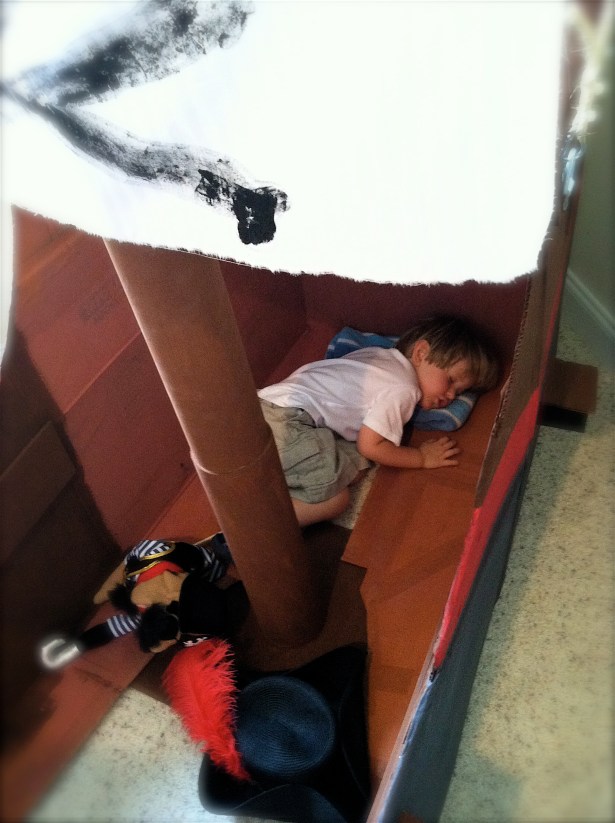
Today the Conch E. Conch is docked in the adventure room and pirates can be seen playing… and napping below deck at all hours of the day.

Tomorrow, Anna will show you a quick and easy way to make the sails!